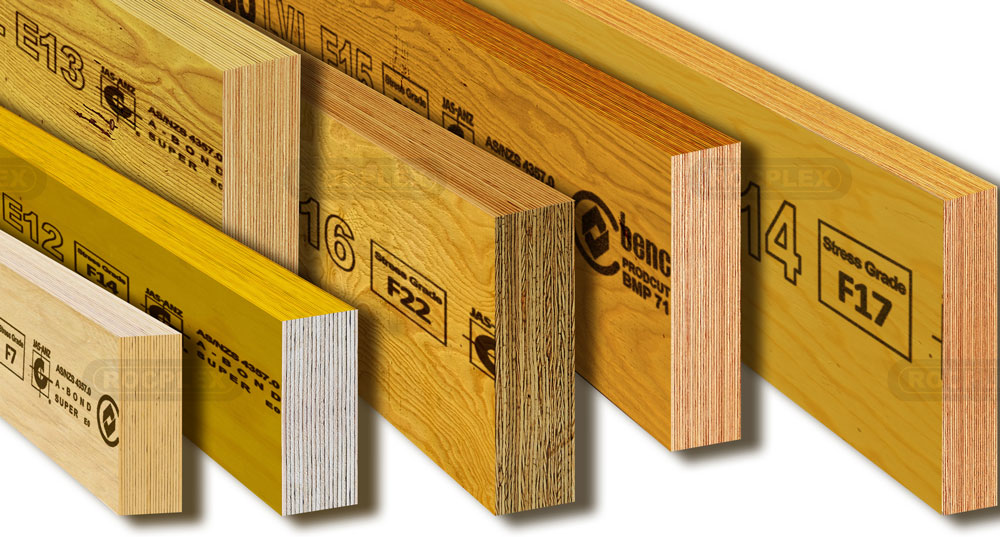
This guide explains what the ratings usually mean, what compliance should look like, and how teams can reduce risk on site.
What is LVL formwork timber, and why do teams use it?
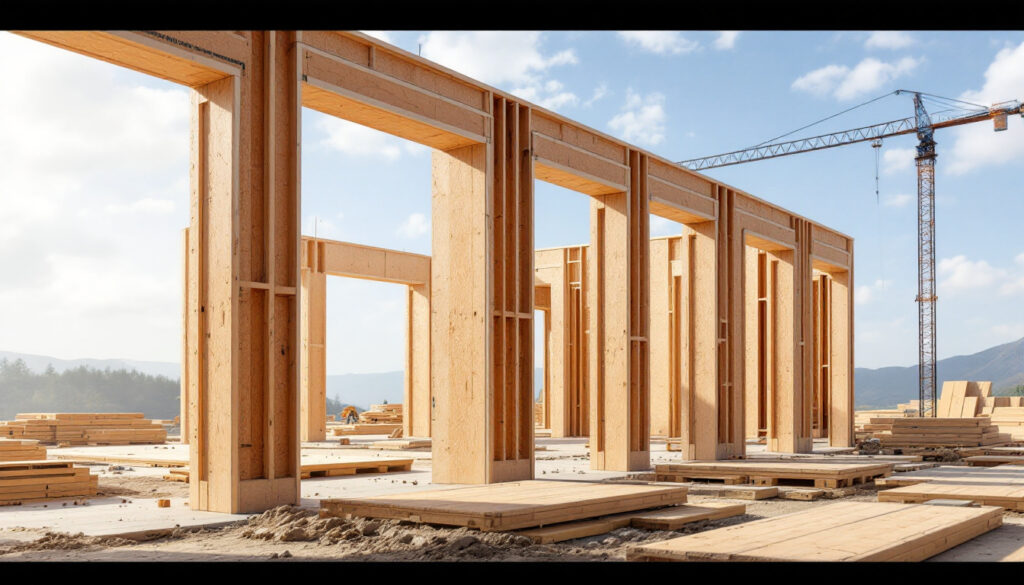
LVL (laminated veneer lumber) is an engineered wood product made by bonding thin timber veneers in the same grain direction. They use it for formwork bearers, joists, walers, and strongbacks because it is typically more uniform, less knot-affected, and more dimensionally stable than many sawn alternatives. When assessing timber LVL formwork prices, contractors often weigh this consistency and reduced waste against upfront material costs.
In practice, that means fewer surprises in deflection, easier line and level control, and more consistent performance across repeated pours.
What do LVL load ratings actually refer to?
Load ratings generally refer to the member’s structural capacity and stiffness under defined conditions. They are not a universal “safe load” number that applies to every span, support layout, or site environment.
Manufacturers usually express LVL capability using design properties (such as bending strength and stiffness) and sometimes a product grade or series. The actual capacity in a formwork setup depends on span, spacing, bracing, restraint against lateral buckling, duration of load, and whether the member is acting as a simply supported beam, continuous beam, or part of a built-up system.
How are LVL formwork loads calculated on site?
They are calculated from actions and combinations, not guesses. For formwork, the main actions often include wet concrete pressure, formwork self-weight, construction live loads (workers, pumps, materials), and impact or dynamic effects.
Engineers or competent designers then check bending, shear, bearing at supports, and deflection. They also check stability issues such as lateral restraint, torsion, and load sharing where members are closely spaced. A “strong” LVL can still fail if it is not braced or if bearings crush the timber at a support.
Which factors change LVL capacity the most in formwork?
Span and restraint change capacity fast. Longer spans increase bending moments and deflection dramatically, and unrestrained compression edges can trigger lateral-torsional buckling.
Moisture exposure also matters. LVL used in formwork is frequently exposed to rain, curing water, and wet concrete contact, so teams must follow the manufacturer’s limits for weather exposure, sealing, and re-use. Damage from notching, drilling, splitting, crushing at props, or repeated nail patterns can reduce capacity and should be treated as a design change, not normal wear.
What compliance documents should LVL formwork timber have?
They should be able to trace the LVL to a manufacturer and a defined product specification. At minimum, teams typically look for a product identification mark, a technical data sheet, and evidence the product is manufactured under a recognised quality system.
Depending on jurisdiction and project requirements, compliance may include third-party certification, a declaration of performance, or documentation showing the LVL meets a nominated standard and grade. If the LVL arrives with no clear product ID and no current data sheet, it is hard to prove capacity and harder to defend decisions after an incident.
How can teams verify that delivered LVL matches the specified rating?
They should verify three things: identity, condition, and suitability for the layout. Identity means the member markings match the specified product and the paperwork. Condition means it is straight enough, not delaminated, not severely checked or split, and not crushed at bearing points from prior use.
Suitability means the section size, lengths, and permitted holes or notches align with the design assumptions. If they swap a size, rotate members, or cut them shorter, they should confirm the revised configuration still satisfies bending, shear, bearing, and deflection checks.
What are the most common compliance mistakes with LVL in formwork?
The most common mistake is assuming any LVL of the same depth is interchangeable. Different LVL products can have different stiffness and strength, and that changes deflection, prop spacing, and safe re-use expectations.
Another mistake is relying on “rule of thumb” spans while ignoring bracing and bearing. Formwork failures often involve local crushing at props, inadequate lateral restraint, or damage accumulation across re-uses. A final mistake is mixing old, untraceable members into a certified system, which makes the entire assembly harder to justify.
How should LVL be handled, stored, and re-used to stay compliant?
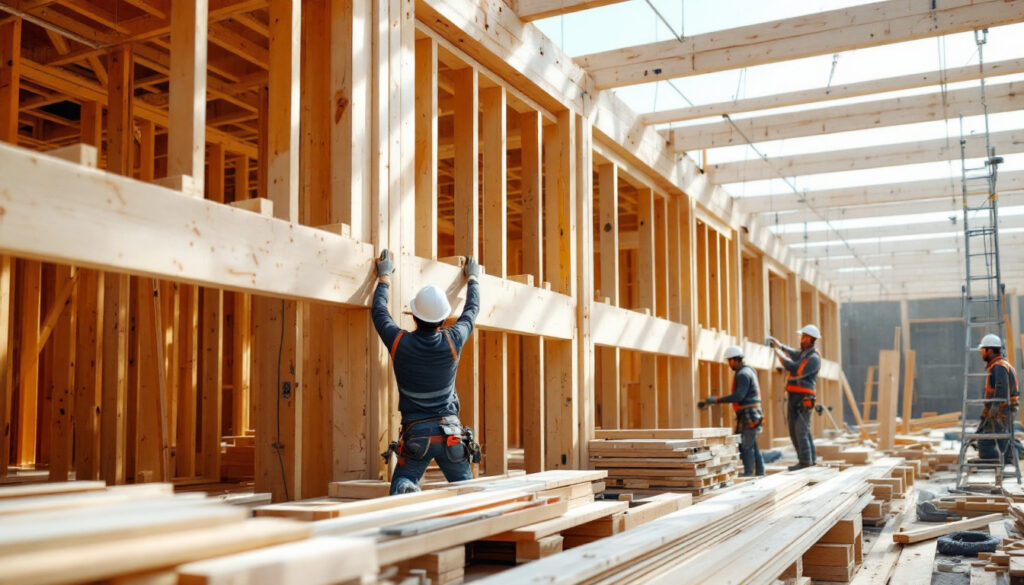
They should store LVL off the ground, supported evenly, and protected from prolonged wetting. Ends should be protected if the manufacturer requires sealing, and damaged members should be quarantined rather than pushed back into rotation.
For re-use, they should implement an inspection routine that checks straightness, delamination, splitting, excessive holes or notches, fastener tear-out, and crushed bearing zones. Where a project requires documented control, they should keep simple records of inspection outcomes and removal from service criteria.
What should they ask suppliers or designers before a pour?
They should ask for the LVL technical data sheet and the formwork design assumptions that drive spacing and bracing. They should also ask what exposure conditions the product is rated for, what notching and drilling rules apply, and what the rejection criteria are for re-used members.
If there is any mismatch between the specified LVL and what arrives on site, they should pause and resolve it before loading the system. In formwork, correct paperwork and correct installation matter as much as the timber itself.
FAQs (Frequently Asked Questions)
What is LVL formwork timber and why is it preferred in construction?
LVL (laminated veneer lumber) formwork timber is an engineered wood product made by bonding thin timber veneers in the same grain direction. It is preferred for formwork bearers, joists, walers, and strongbacks because it stays straighter, carries load more predictably, is more uniform, less knot-affected, and dimensionally stable compared to many solid timbers. This results in fewer surprises in deflection, easier line and level control, and consistent performance across repeated pours.
How do LVL load ratings relate to their structural capacity in formwork applications?
LVL load ratings refer to the member’s structural capacity and stiffness under defined conditions but are not universal safe loads for every span or layout. Manufacturers express LVL capability using design properties like bending strength and stiffness and sometimes a product grade or series. Actual capacity depends on factors such as span length, spacing, bracing, lateral restraint, load duration, and whether the member acts as a simply supported beam or part of a built-up system.
What factors most significantly affect the load capacity of LVL formwork timber on site?
Span length and restraint have the greatest impact on LVL capacity; longer spans increase bending moments and deflection dramatically. Lack of lateral restraint can cause lateral-torsional buckling. Moisture exposure from rain or wet concrete can degrade LVL if manufacturer limits are exceeded. Damage from notching, drilling, splitting, crushing at props, or repeated nail patterns also reduces capacity and should be treated as a design change.
What compliance documentation should accompany LVL formwork timber to ensure its suitability?
LVL formwork timber should have traceability to a manufacturer and defined product specification. Essential documents include a product identification mark, technical data sheet, and evidence of manufacture under a recognized quality system. Depending on jurisdiction or project needs, compliance may also require third-party certification, declaration of performance, or documentation proving the LVL meets nominated standards and grades.
How can construction teams verify that delivered LVL matches specified ratings before use?
Teams should verify identity by checking member markings against specifications and paperwork; assess condition ensuring members are straight without delamination, splits, or crushing at bearing points; and confirm suitability by verifying section sizes, lengths, holes or notches align with design assumptions. Any alterations such as size swaps or cuts require rechecking bending, shear, bearing, and deflection criteria to maintain safety.
What best practices ensure proper handling, storage, and re-use of LVL formwork timber to maintain compliance?
LVL should be stored off the ground on even supports protected from prolonged wetting; ends should be sealed if required by the manufacturer; damaged members must be quarantined rather than reused. For re-use, implement inspection routines checking for straightness, delamination, splitting, excessive holes/notches, fastener tear-out, and crushed bearing zones. Keeping simple records of inspections and removal criteria helps maintain documented control over LVL condition.
More to read : LVL Timber Formwork Prices: What Impacts Cost Per Metre?
Leave a Reply